1. General
A. The left and right pitot-static tubes, the elevator feel left and right pitot
tubes, the temperature probe, and the left and right alpha vanes are heated to
prevent the formation of ice which could affect sensing accuracy. The heating is
accomplished by electrical heaters installed as an integral part of the units.
The heaters consist of resistance elements which operate on 115-volt ac.
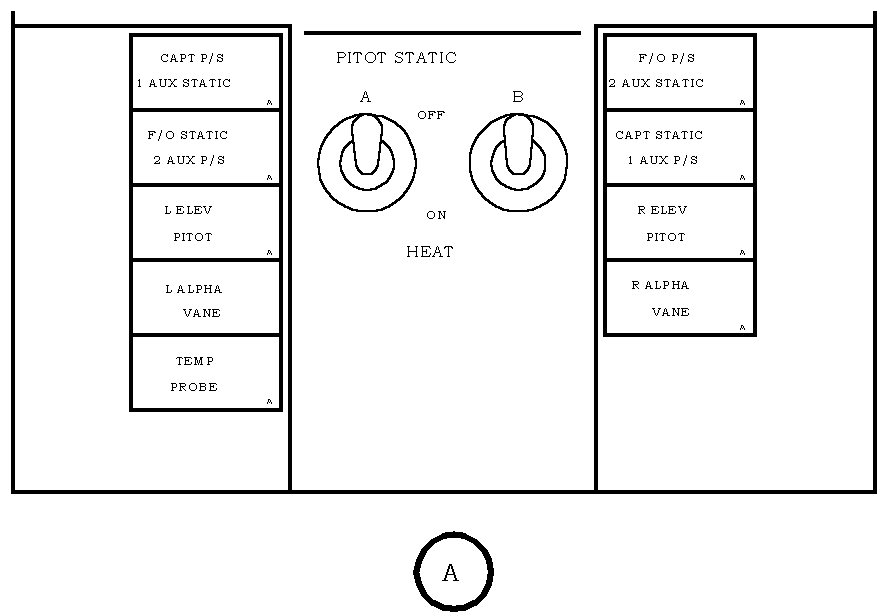
B. The heaters are controlled by two switches on the module in the
overhead panel. The control switches are four-pole two-position (ON-OFF) toggle
switches. The system has an indicating circuit consisting of a current
transformer, an electronic switch, and an indicating light for each sensor. The
electronic switches and indicating light circuits are installed on printed
cards. The transformer is installed in the line to the heater.
C. One switch controls the heating of the upper and lower left pitot-static
heater, temperature probe heater, left alpha vane heater, and the left elevator
feel pitot heater. The other switch controls the heating of the upper and lower
right pitot-static heaters, right alpha vane heater and the right elevator feel
pitot heater. When the transformer does not sense current flow, the electronic
switch provides a ground for the indicating light.
D. The light circuits receive 28-volt dc power through the master dim relay from
the INDICATOR DIM BUS NO. 1 DC and NO. 2 DC circuit breakers on the P6 panel.
The lights are of the press-to-test type and may be tested individually or
through the use of the master light test switch. The lights may also be dimmed
through the use of the master dim switch.
E. A module located in the pilots' overhead panel contains the control
switches, indicating lights, transformers, and printed circuit cards. The
module also contains the switches and indicating lights for the control cabin
window anti-icing system.